Key facts in brief
- 4 to 20 mA is the most robust analog output and detects a broken wire, because 0 mA is never a valid value.
- 0 to 10 V is simple and cheap but more sensitive to cable length and electrical noise.
- IO-Link sends the exact digital value plus diagnostics and lets you set up the sensor from the PLC.
- RS485 and other serial interfaces suit long cables and several sensors on one line.
Choosing a distance sensor is not only about the measuring principle. The output decides how the distance reaches your controller, how easy commissioning is and how much information you get when something goes wrong. Here are the options you will find on industrial distance sensors and when each one fits.
Analog current: 4 to 20 mA
The sensor maps its measuring range onto a current between 4 and 20 mA. Because current does not drop along the cable, the signal stays accurate over long distances and is resistant to electrical noise. A reading of 0 mA immediately tells you the cable is broken.
- Best for: long cables, noisy plants, existing analog input cards.
- Watch: resolution depends on the analog input card of your PLC.
Analog voltage: 0 to 10 V
A voltage output is easy to wire and read, and most PLCs and controllers accept it. Over long cables, voltage drops and interference can shift the value, so keep cables short and shielded.
IO-Link: digital value plus diagnostics
IO-Link is a point-to-point digital interface over a standard three-wire sensor cable. The sensor sends the exact distance as a number, so there are no conversion errors. On top of that you get signal quality, temperature and warning messages, and you can change the measuring range or filter settings from the PLC or replace a sensor without manual setup.
- Best for: new machines, Industry 4.0 projects, predictive maintenance.
- Needs: an IO-Link master module.
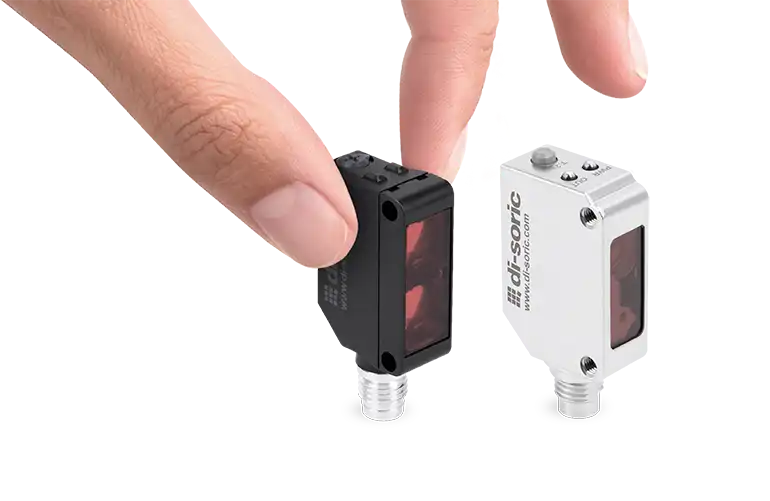
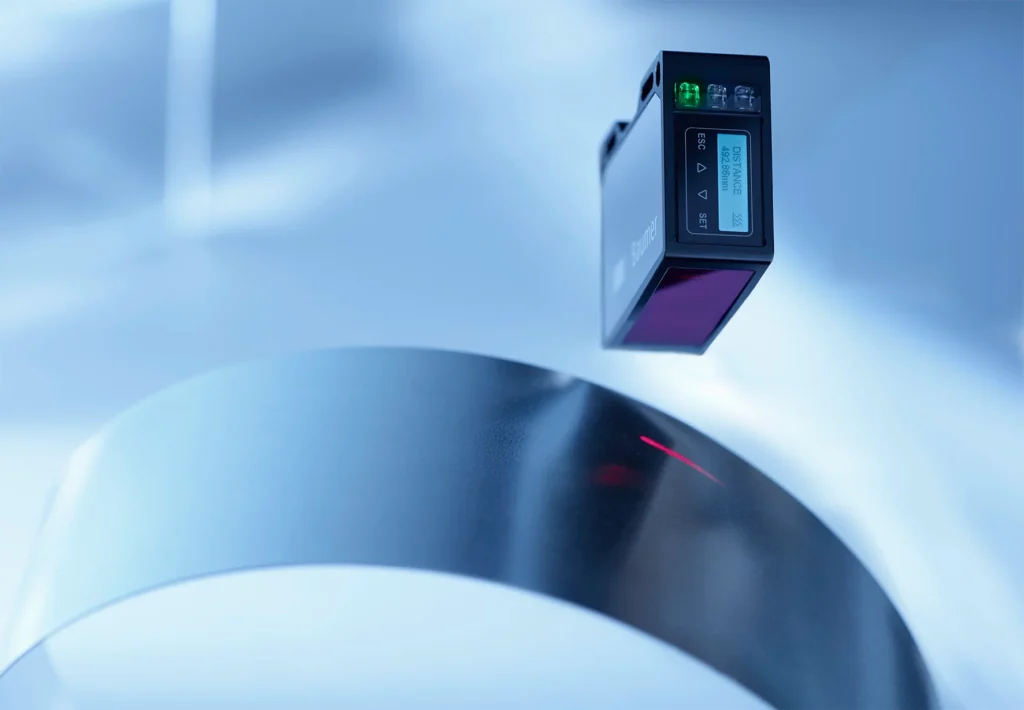
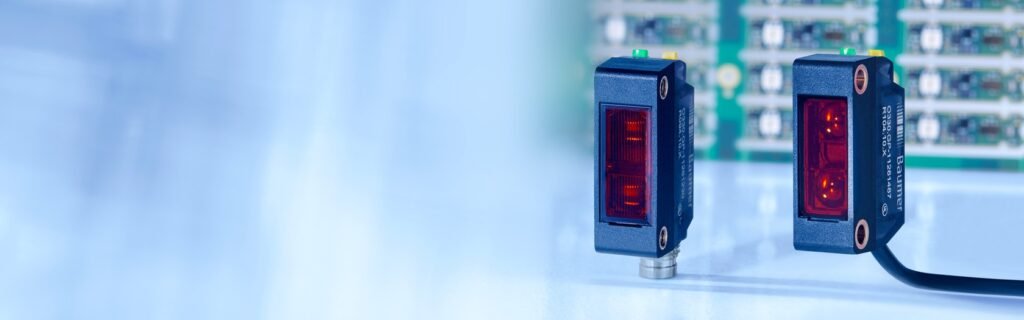
Most modern sensors from Baumer and di-soric offer IO-Link, often alongside an analog output.
RS485, RS232 and SSI
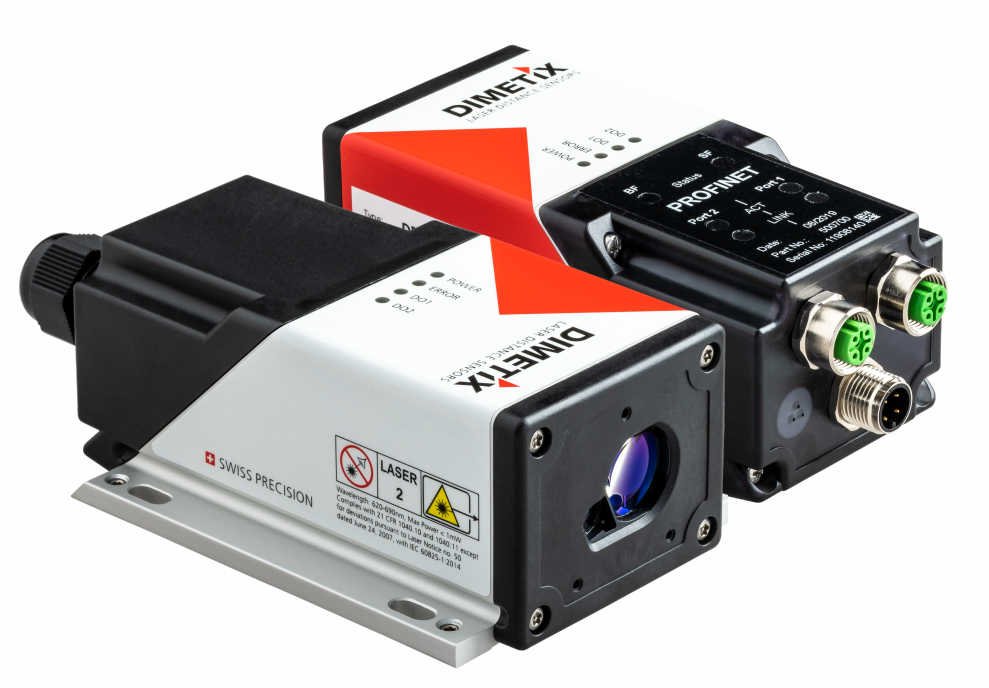
Serial interfaces are common on long-range laser sensors used for positioning. RS485 handles long cables and lets several sensors share one line. SSI is popular where the sensor replaces an absolute encoder in crane and storage systems. Dimetix laser distance sensors, for example, combine serial interfaces with analog and digital outputs.
Switching outputs: PNP or NPN
Sometimes you do not need the distance itself, only whether something is closer or further than a set point. A switching output, PNP or NPN, does exactly that and is the simplest way to integrate a distance sensor into a control circuit.
Quick decision guide
- Existing analog inputs and long cables: 4 to 20 mA.
- Short cables and simple controllers: 0 to 10 V.
- New machine with diagnostics and remote setup: IO-Link.
- Long-range positioning or several sensors on one line: RS485 or SSI.
- Just a threshold: switching output.
Need help matching the sensor to your PLC? Tell us your controller and input cards. Send us your application and our engineers in Pune will recommend a model and send a quote.
Read next: