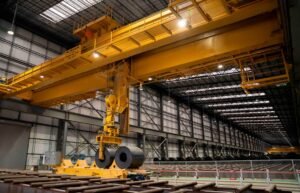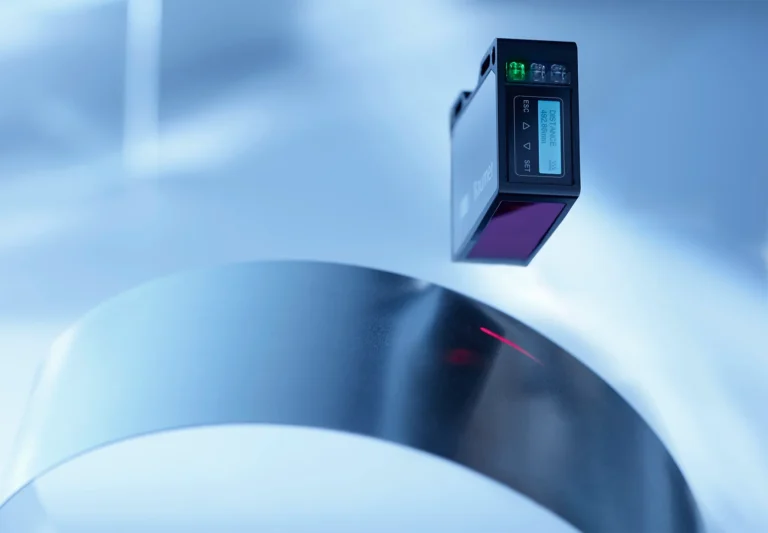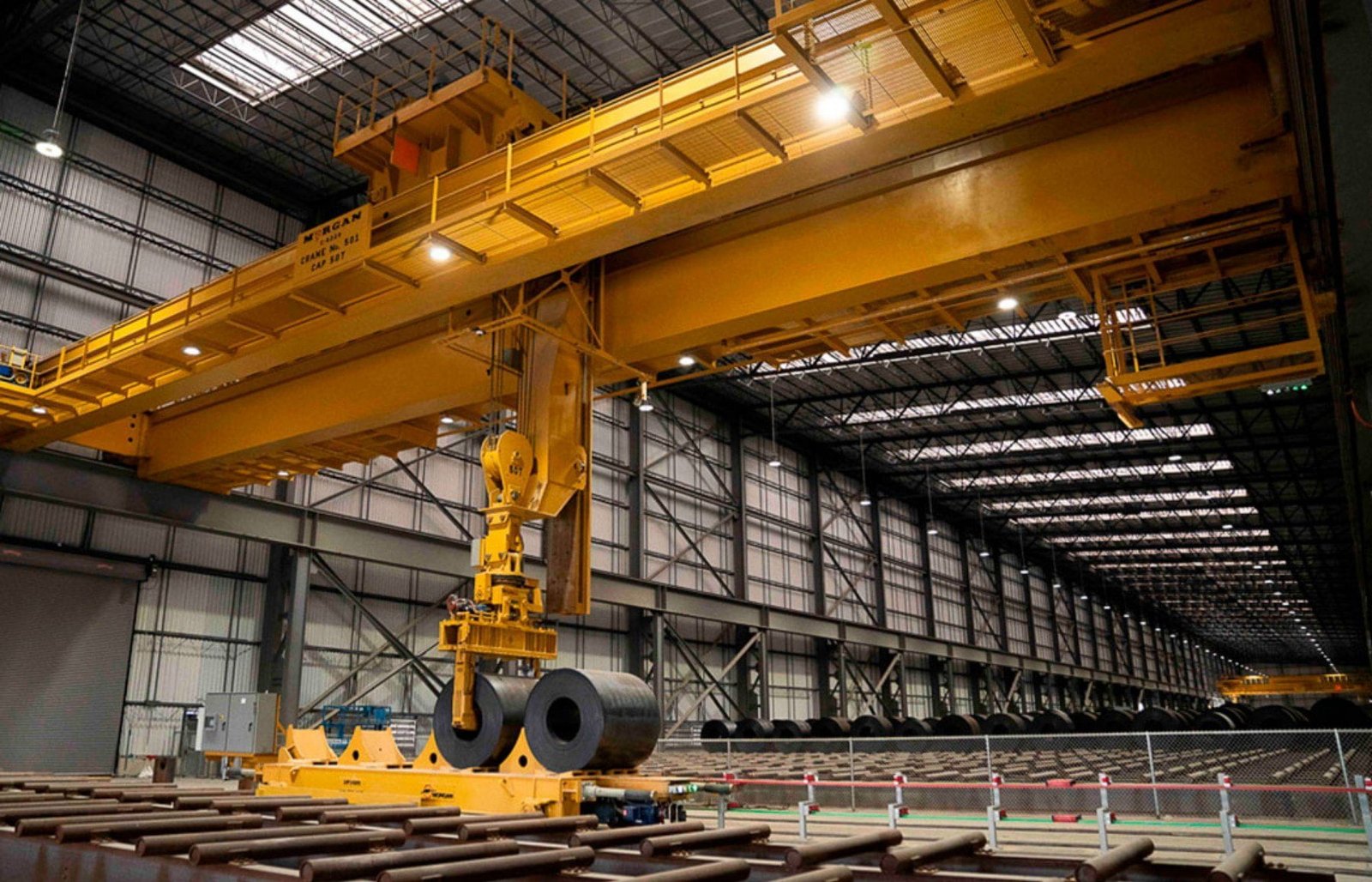
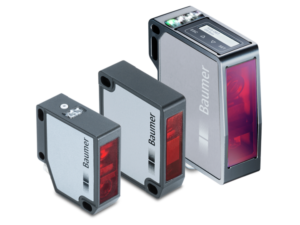
Laser distance sensors give EOT cranes, gantries, transfer cars and stacker cranes an absolute position over long distances, and warn before two cranes collide.
Encoders on wheels slip, and limit switches only tell you about the end of travel. A long range laser distance sensor measures the actual position of the crane or trolley against a fixed reflector or wall, so the controller always knows where it is.
Recommended technologies: laser distance sensors, time-of-flight sensors, lidar sensors.

Measure bridge position along the bay for automatic positioning.
Measure cross travel of the trolley.
Measure the gap between two cranes on the same rails and slow or stop in time.
Measure the height of the hook or load.
Slow down before buffers and end stops.
Position automated storage and retrieval machines.
Bays are often 50 to 200 m long. Long range laser sensors with a reflector cover these distances.
For long distances and high accuracy, a reflector plate on the opposite wall gives the best results.
Yes. Typical outputs are 4 to 20 mA, SSI, Profibus, Profinet or IO-Link depending on model.
years in automation
Share the target, range and environment. Our engineers reply with a recommended sensor and a quote, usually within one working day.
years with Baumer