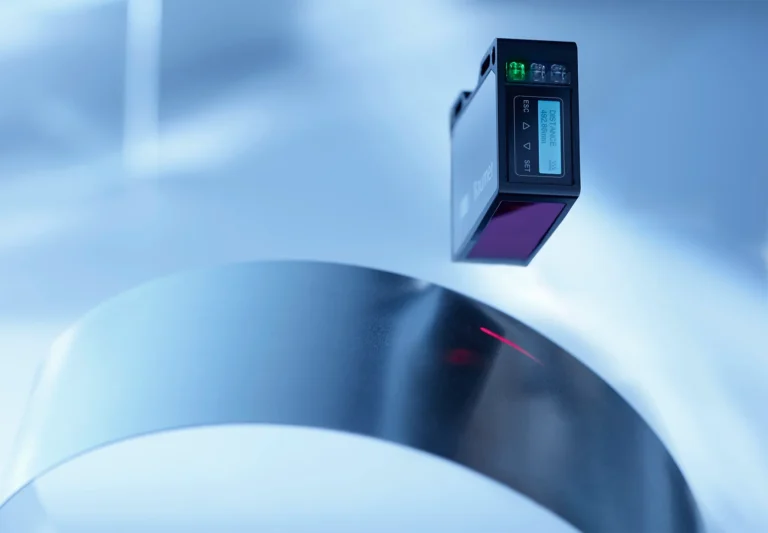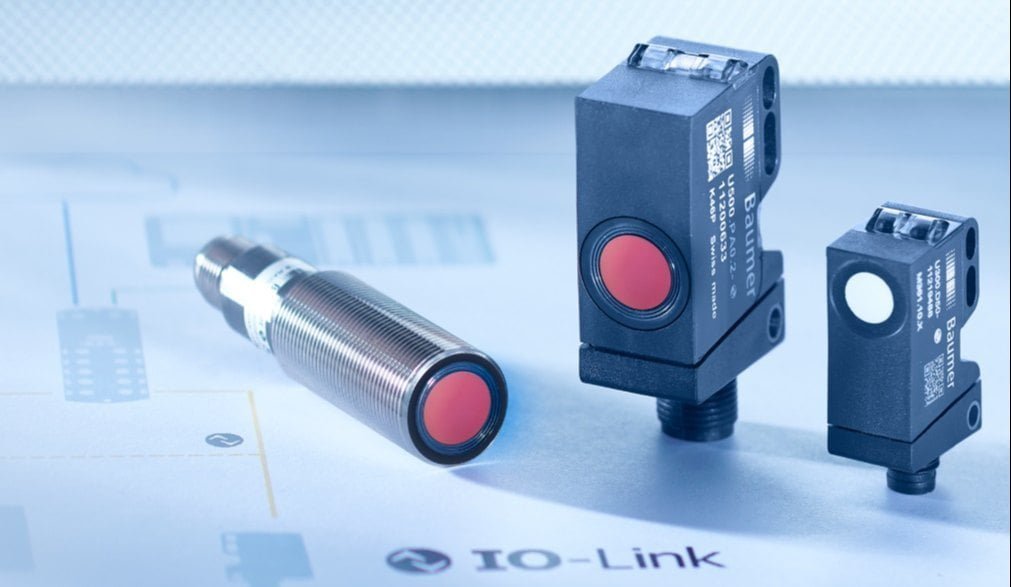
Ultrasonic sensors measure the echo of a sound pulse, so the colour, shine or transparency of the target does not matter. They are a reliable choice for liquids, bulk solids, glass, foil and dusty or misty areas.
An ultrasonic distance sensor sends a short pulse of high frequency sound and measures the time until the echo returns. The speed of sound gives the distance. Modern sensors compensate for air temperature to stay accurate.
Because they work with sound, ultrasonic sensors see transparent bottles, film, liquids and black rubber equally well. Their wider sound cone also makes them tolerant of uneven surfaces such as granules or wood chips.
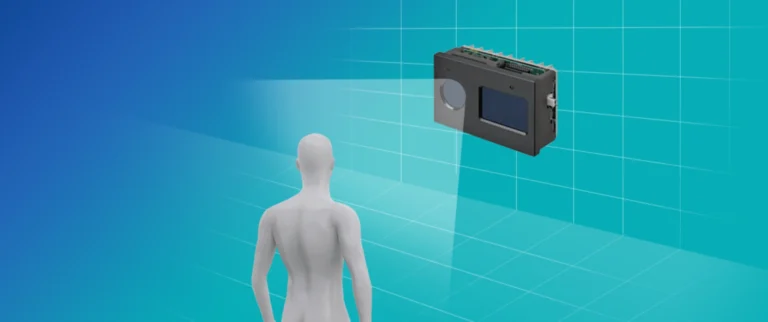
The sensor measures the travel time of the sound pulse to the target and back.
Built-in compensation keeps readings stable as the air warms or cools.
A wider beam averages uneven surfaces such as bulk material or liquids with ripples.
Values are typical for the technology. Exact figures depend on the model, so ask us for the datasheet that fits your application.
| Parameter | Typical value |
|---|---|
| Measuring range | Typically 20 mm up to around 6 to 10 m, depending on model |
| Resolution | Typically 0.1 to 1 mm |
| Targets | Liquids, powders, granules, glass, film, any colour |
| Outputs | 4 to 20 mA, 0 to 10 V, IO-Link, switching outputs |
| Blind zone | A short zone in front of the sensor where it cannot measure |
| Typical housings | M18 and M30 cylinders and compact block housings up to IP67 |
Typical measuring tasks in Indian plants, with installation tips and recommended models.
Industrial ultrasonic sensors typically measure from a few centimetres up to several metres. Long range models reach around 10 m.
Yes. Sound reflects from glass, PET bottles and clear film, which optical sensors can miss.
Strong air currents, steam, temperature gradients and foam on liquids. Correct mounting and a suitable sensor solve most issues.
Ultrasonic is the usual choice for liquids and bulk solids. Laser suits narrow openings or long ranges where a small spot is needed.
years in automation
Share the target, range and environment. Our engineers reply with a recommended sensor and a quote, usually within one working day.
years with Baumer