LiDAR (light detection and ranging) sensors measure many distances by sweeping a laser across a line or an area. They give machines a picture of their surroundings for navigation, collision avoidance and contour measurement.
A LiDAR sensor uses time-of-flight laser pulses, like a single point laser sensor, but rotates or steers the beam to measure hundreds or thousands of points per second. A 1D LiDAR measures one long range distance. A 2D LiDAR scanner measures a full contour in one plane, and 3D LiDAR builds a point cloud.
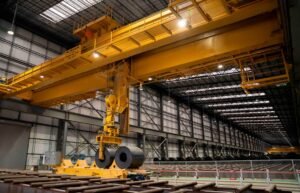
In industry, LiDAR guides AGVs and mobile robots, prevents crane and vehicle collisions, measures stockpiles and checks the profile of large objects.
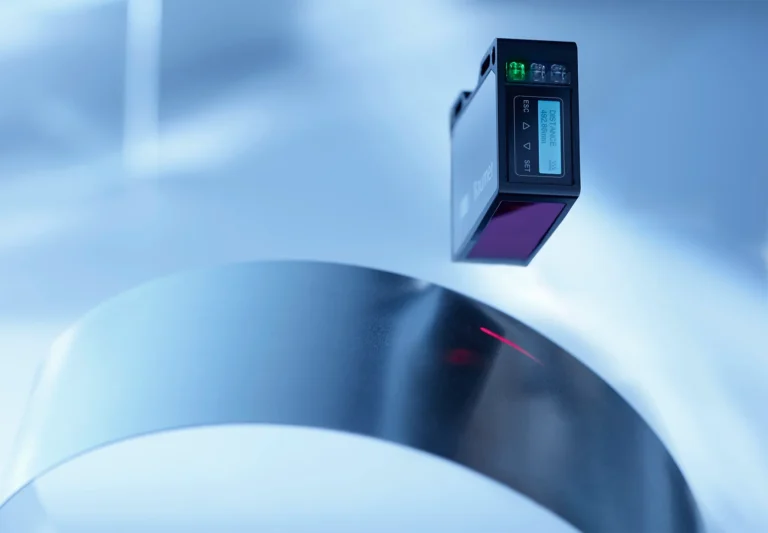
One long range distance, often used for positioning and anti-collision.
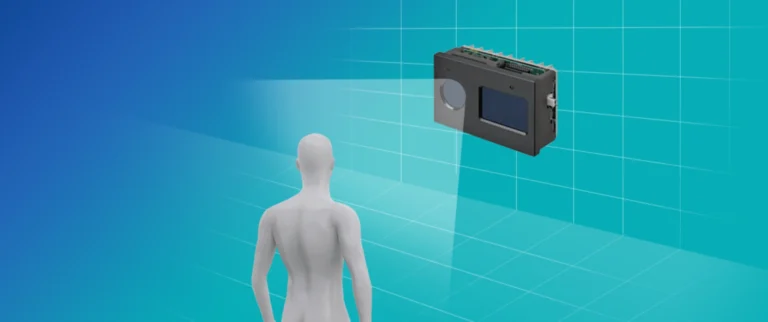
A contour across a plane, used for navigation, area monitoring and profiles.
A point cloud of the scene, used for volume and object detection.
Values are typical for the technology. Exact figures depend on the model, so ask us for the datasheet that fits your application.
| Parameter | Typical value |
|---|---|
| Measuring range | From a few metres up to well over 50 m, depending on type |
| Field of view | 2D scanners commonly cover 180 to 360 degrees |
| Scan rate | Typically 10 to 50 scans per second |
| Outputs | Ethernet, RS485, CAN or switching outputs for zones |
| Light source | Infrared laser, class 1 eye safe |
| Typical uses | AGVs, cranes, robots, stockpile and profile measurement |
Typical measuring tasks in Indian plants, with installation tips and recommended models.
A laser distance sensor measures one point. LiDAR measures many points by scanning the beam, giving a line or area of distances.
Industrial LiDAR uses class 1 lasers, which are eye safe. Note that a measuring LiDAR is not a safety device unless certified as a safety laser scanner.
Many models work outdoors, but sunlight, rain and fog reduce range. Tell us your conditions so we can suggest a suitable model.
It depends on range, scan angle and interface. See our price guide or request a quote.
years in automation
Share the target, range and environment. Our engineers reply with a recommended sensor and a quote, usually within one working day.
years with Baumer