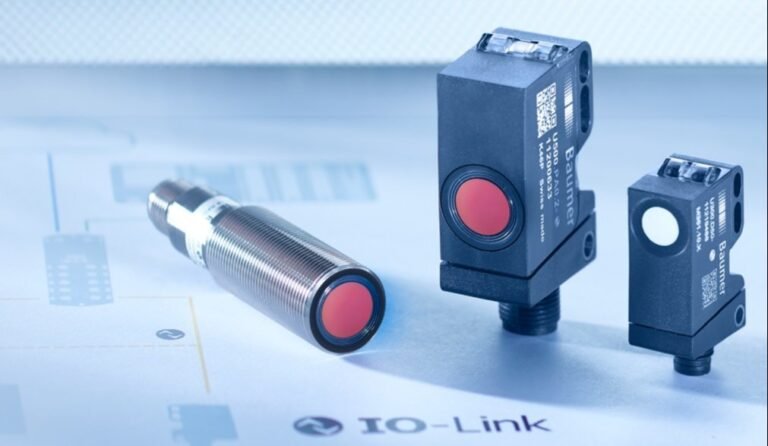
Laser distance sensors measure with a focused beam of light, so they are fast, accurate and work on small targets. Use them for anything from micrometre thickness checks to positioning a crane 100 m away.
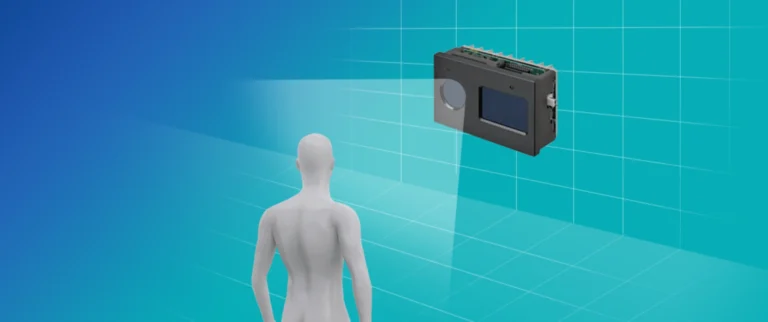
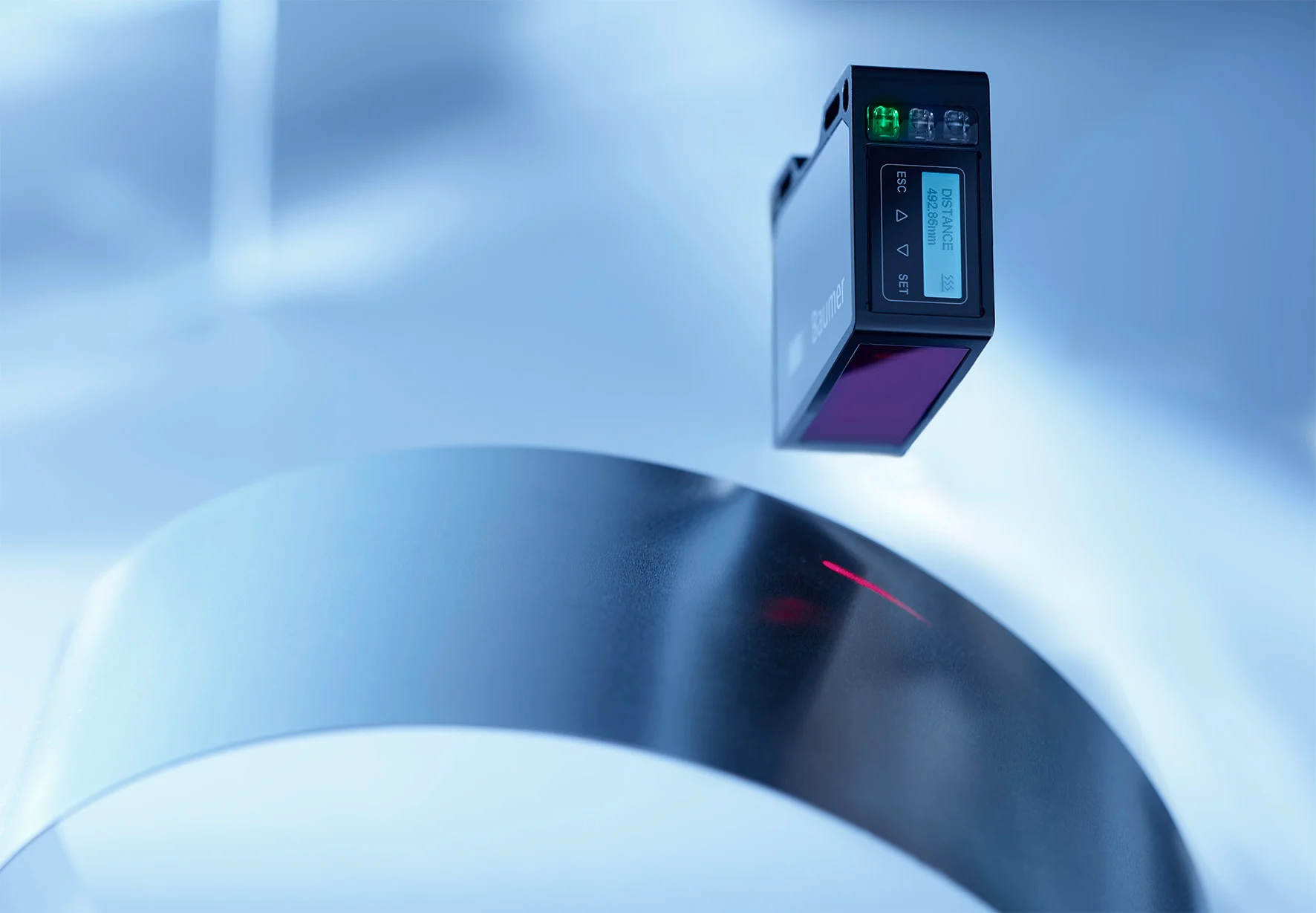
A laser distance sensor projects a visible or infrared laser spot onto the target and evaluates the reflected light. Two methods are common in industry. Triangulation sensors look at where the spot lands on a receiver and reach very high resolution over short ranges. Time-of-flight and phase shift sensors time the light itself and measure over tens or hundreds of metres.
Because the spot is small, laser sensors measure exactly where you point them, which makes them the first choice for thickness, diameter, edge position, loop control and long range positioning.

Short range, very high resolution. Ideal for thickness, profile, run-out and small parts.
Long range with a strong background suppression. Ideal for positioning and level.
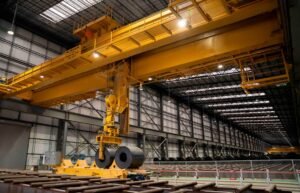
Long range with fine resolution. Ideal for cranes, storage systems and travel distance.
Values are typical for the technology. Exact figures depend on the model, so ask us for the datasheet that fits your application.
| Parameter | Typical value |
|---|---|
| Measuring range | A few mm (triangulation) up to 100 m and more on natural targets; longer with a reflector |
| Resolution | Micrometres for short range triangulation; millimetres for long range |
| Response time | Typically under 1 ms to a few ms |
| Outputs | 4 to 20 mA, 0 to 10 V, IO-Link, RS485, switching outputs |
| Light source | Red laser class 1 or class 2 |
| Typical housings | Compact plastic or metal housings up to IP67 |
Typical measuring tasks in Indian plants, with installation tips and recommended models.
Short range triangulation sensors resolve a few micrometres. Long range time-of-flight sensors typically measure to a few millimetres. Accuracy also depends on the target surface and mounting.
Yes, but very shiny or very dark targets need the right sensor and mounting angle. Tell us the material and we will suggest a suitable model.
Industrial sensors use laser class 1 or class 2, which are safe in normal use. Avoid staring into a class 2 beam.
Laser sensors are more precise and have a small spot. Ultrasonic sensors are better for liquids, transparent objects and dusty or misty air.
years in automation
Share the target, range and environment. Our engineers reply with a recommended sensor and a quote, usually within one working day.
years with Baumer